个人资料
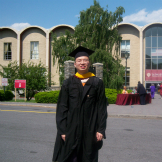
Haiquan Lu received his B.S. degree of Life Science in Shandong Normal University in 2006. After graduation from college, he was admitted by Fordham University in New York with presidential scholarship, where he received his M.S. degree of Cell Biology in 2008. He then moved to Texas and finished his Ph.D. in Cancer Biology and Experimental Therapeutics in University of Texas MD Anderson Cancer Center. Currently he is working in Johns Hopkins University School of Medicine. Dr. Lu’s career goal is to delineate the mechanisms of drug resistance in breast cancer and develop novel mechanism-based drugs and therapeutic strategies to improve clinical outcome of breast cancer patients. Dr. Lu is experienced in mentoring young students to start their scientific careers. He is familiar with the admission process of graduate schools in United States and enjoys assisting students for their application.

)window.location='http://www.compassedu.hk/upload/attach/upfiles/imgs/20160901749359348.jpg')
)window.location='http://www.compassedu.hk/upload/attach/upfiles/imgs/20160901749396539.jpg')
)window.location='http://www.compassedu.hk/upload/attach/upfiles/imgs/20160901749429615.jpg')
)window.location='http://www.compassedu.hk/upload/attach/upfiles/imgs/20160901749509086.jpg')
)window.location='http://www.compassedu.hk/upload/attach/upfiles/imgs/20160901749536258.jpg')